The Days of Wellbeing as a Perk are Gone: In Victoria, It’s a Regulatory Duty
Understanding CSR, Wellbeing + the Regulations that Support Businesses in Victoria

For many years now in Australia, corporate social responsibility (CSR) meant something adjacent to the business. It would look like a tree planting day, or a “FairTrade” logo, or a charity partner we’d recognise named in the annual report. These are good things, and led the way to where we are now, but more so done alongside the work, rather than through it.
Needless to say, that was the 90’s and a lot has changed since then. Since 1st December 2025, Victorian employers have gained a new duty under the Occupational Health and Safety (Psychological Health) Regulations 2025, requiring them to “proactively identify, manage and eliminate psychosocial hazards in their workplace” (reg. 1-1). The demands of our jobs, low recognition day to day and confusing role clarity (frequently, an employee leaving and another absorbing their role in addition to their own). These are all contributing to our increased personal and workplace relationships strain. These culture issues are needing to be managed now, rather than whenever the workload settles. They are now, in the eyes of WorkSafe, safety issues “consistent with an employer's existing obligation to eliminate risks to health and safety so far as is reasonably practicable” (reg. 9-1).
This is a revolutionary reframe for workplaces. Wellbeing has moved from the outskirts of the CSR conversation directly to its centre, because, the workplace itself is now recognised as the place where psychological harm is done, and where it must be actively prevented.
Safe Work Australia's most recent nation-wide data shows that “claims for mental health conditions continued to increase in 2023-24, and now account for 12 per cent of all serious claims, with median time lost from work almost five times that recorded across all other injuries and diseases” (reg. 4-1). This tells us in plain english where huge business risks lie in Australia, and that they’re increasingly growing.
For HR and P&C leaders, this is creating real pressure - and pressure that not every leader even knows about yet. The instinct of P&C to care for people has always been there; what's now changed is the expectation that this care be systematic, demonstrable and genuinely embedded into the workplace operations. So this can no longer be an EAP number on the intranet footer or a mindfulness app nobody wanted to use their phone storage to download. It should be integrated, and consistent all year round.
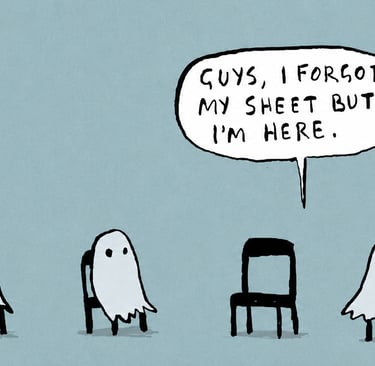
And this is where the CSR conversation needs a little bit of honesty. Regulation like this can prompt great action, but it can also prompt performance; particularly when the regulation popped up overnight and threatens an audit. Wellbeing washing: the corporate equivalent of an ergonomic office chair fit perfectly for a ghost, is a real risk when compliance becomes the primary motive. WorkSafe's guidance tells us that performative isn't going to cut it too: “information, instruction or training cannot be the exclusive or predominant risk control unless other measures are not reasonably practicable” (reg 3-1). This is another way of saying, ticking the box of a single session wont be good enough. Wellbeing efforts need to be routed in design and be consistent. It needs to be ongoing and it needs to be structural, not to say it needs to be a burden to the HR teams, outsourcing is encouraged alongside a framework of internal psychological safety. This is the space that Evo Workshops nurtures for employee and organisational success.
The effort of implementing an initiative that is built out of care and true human-ness rather than policy first is always going to be richer, particularly when it satisfies the policy too - because it's rich in what the policy is all about. It's the piece genuine CSR has always been about, creating a workplace where employees treated as workers and cared for as people, because the organisation understands what it owes the people who opt into spending the minutes of their life with them.
The regulatory changes gives Victorian businesses great opportunity to act now in wellbeing evolution and progress. It will mean the organisations that truely don't care, will do it as a tick-box exercise to satisfy an auditor. But a considered, human, expertly delivered wellbeing program will do something infinitely more valuable and enrich a workplace and let the culture speak for itself - which is just good business, and now, is the law.
Evo Workshops acknowledges and pays our respects to the traditional custodians and First People of the land on which we live, learn and grow - the Wurundjeri People. We acknowledge our events are on stolen land. We pay our respects to them and their cultures, and to elders past, present and future as well as their continuing connection to land, waters and community.
hello@evoworkshops.com.au